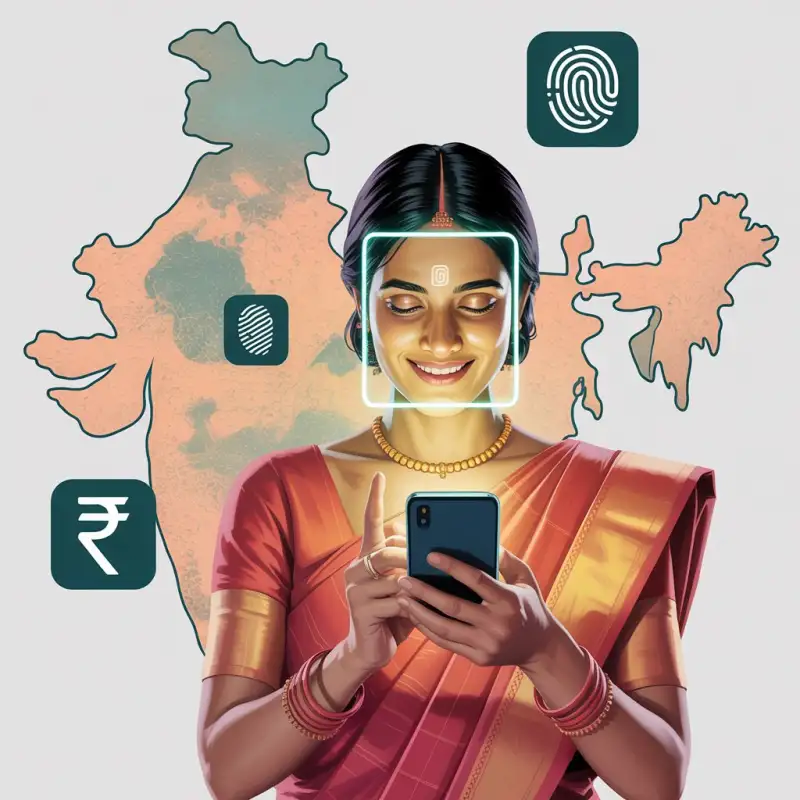
Now AePS Transactions Can Be Carried Out Using Facial Authentication
In a significant leap towards enhancing the security and convenience of financial transactions, the Aadhaar-enabled Payment System (AePS) now supports facial authentication. This breakthrough aims to make banking more accessible and secure for millions of users across India—particularly in remote areas—while reducing reliance on traditional biometric methods.
What Is AePS?
AePS is a bank-led model that leverages the Aadhaar infrastructure to enable seamless and secure financial transactions. It allows users to perform various banking services such as:
- Cash withdrawals
- Balance inquiries
- Mini statements
- Money transfers
...using their Aadhaar number and biometric data.
The introduction of facial authentication adds a new, user-friendly dimension to this system.
How Facial Authentication Works in AePS
Facial authentication in AePS uses advanced AI to verify a user's identity by comparing their facial features with the image stored in the Aadhaar database.
Here's how it works:
- Initiate the Transaction: The user provides their Aadhaar number to start the transaction.
- Capture the Face: A facial image is captured using a camera instead of relying on fingerprints or iris scans.
- Verification: The captured image is matched with the Aadhaar database in real-time.
- Transaction Approval: If the face matches successfully, the transaction is securely approved.
This method is especially useful in scenarios where fingerprint or iris recognition may fail—such as for elderly users, manual laborers, or individuals with worn biometrics.
Benefits of Facial Authentication for AePS Transactions
Facial authentication offers several significant benefits:
- Increased Security: Facial features are unique and harder to replicate than fingerprints.
- Convenience: No need to carry Aadhaar-linked devices or ensure clean fingerprints.
- Accessibility: Overcomes challenges faced by the elderly and manual laborers with fingerprint recognition.
- Seamless Integration: Can be easily implemented into existing AePS systems without major infrastructure changes.
Impact on Digital Payments in Rural India
The adoption of facial authentication in AePS is a game-changer for rural India. It simplifies transactions and ensures that more people can access banking services without authentication hurdles—narrowing the financial inclusion gap between urban and rural areas.
A Step Towards a Cashless Economy
This development aligns with the Indian government’s vision of a cashless economy. By promoting secure, convenient digital transactions, it encourages broader adoption of digital payments and reduces cash dependency.
Security and Privacy Concerns
Despite its advantages, facial authentication raises valid concerns about data security and privacy. Ensuring that biometric data is securely stored and used strictly for authorized transactions is crucial. Authorities are expected to implement robust safeguards to protect the Aadhaar database from misuse or breaches.
The introduction of facial authentication in AePS marks a revolutionary step in India's digital banking landscape. It enhances security, increases accessibility, and supports the vision of a more inclusive and cashless economy. As this technology evolves, it has the potential to transform how millions of Indians conduct financial transactions.
Stay tuned for more updates on how facial recognition is shaping the future of digital payments in India!


